30 days of daily practice – what it actually teaches you about behavior change
When forming a new habit, it matters to be clear about your motivation and be firm with your methods.

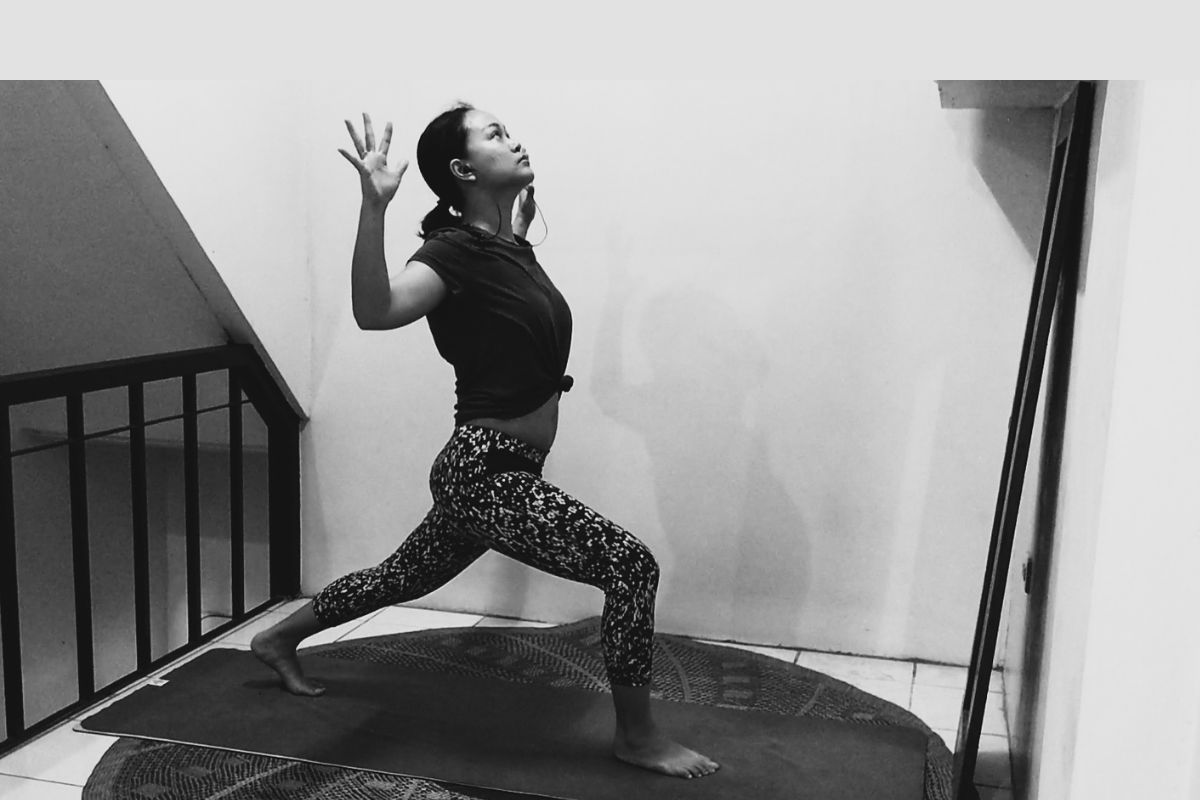
Yoga practice at home © Rocel Ann Junio-Balbutin
In January 2021, I practiced yoga every day for a month. I followed Yoga With Adriene’s BREATH – A 30-Day Journey, and completing it has been quite fun and insightful. I have never done any 30-Day Challenges before, but I was curious about why people do it and how they can sustain it.
I’m happy to prove myself wrong and to change my mind about keeping routines. When we can barely control anything outside of what we know now and what happens in the confines of our homes, the predictability of routines can bring us comfort during uncertain times.
I have been practicing yoga on and off since 2014, and as much as I enjoy it and treasure the research-backed benefits of doing yoga, I let so many distractions get in the way of following through.
This 2021, I’m not making any more excuses. I’m changing how I treat my body and myself. Now I know I can show up to do something not out of responsibility or external pressure, but for the gift and the need to put myself first. As an Obliger and a giver, this is HUGE for me.
Let me share what worked for me: having an intrinsic motivation, changing my mindset about myself, and making sure my methods allowed me to overcome challenges. If you are struggling with stopping a habit or thinking of forming a new one, some of these tips might be useful for you.
1. Motivation
Improving my physical and mental health was my main motivation for doing this.
In the latter half of 2020, I felt so tired and distracted to do any workouts. Early into the pandemic, I did weekly workout sessions – a dance workout with the fiancé followed by a short yoga practice. But the weekly sessions turned into monthly affairs, and then none.
Not long after, all the stress from trying to survive 2020 was stored in my body. I was having persistent lower back pain, shoulder ache, and tight hamstrings. I also had trouble sleeping, something I NEVER had problems before. I knew then that these were manifestations of mental distress.
I was in a vicious cycle of imbalance and I had to put a stop to it. Yoga has done wonders for me before and I trust I would still get the same benefits, even more so with our current circumstances.
It is not enough though to know the benefits of doing or not doing something. One must have a clear motivation to form or stop a habit. Studies show that having intrinsic motivation is better at sustaining efforts in the long-term compared to external influences. The practice or the journey becomes the reward in itself, no matter the outcome.
For someone who is obsessed with achieving goals and ticking off items on her checklists, I still struggle with doing anything without measurable outcomes. Yoga is helping me with this. I see it as an activity I get to enjoy and improve on outside of our merit-centric culture. No one will give me any performance reviews after doing X number of sessions. I can arrive on my mat as I am and as how I want to be.
As odd as it may sound, I also feel motivated when I think of good habits as an investment in my Future Self. I have to take care of my body now so my Future Self does not have to suffer in pain, for her to spend her time and money enjoying life and not on medications or hospital bills. Of course, I cannot possibly predict the state of my health in the coming years but I can take care of my body now to feel more grounded and balanced.
If this technique is not your jam, figure out what works for you. Leo Babauta of Zen Habits mentioned in this episode on The Tim Ferriss Show that his kids and his wife motivated him to quit smoking and get his sh*t together. It wasn’t because they pressured him to do it, but he was determined to be the father and husband they can be proud of. His motivation was tied to his identity.
2. Mindset
James Clear, author of Atomic Habits, says how we see ourselves has an impact on the habits we form. “The key to building lasting habits is focusing on creating a new identity first. Your current behaviors are simply a reflection of your current identity,” he says. “To change your behavior for good, you need to start believing new things about yourself. You need to build identity-based habits.”
Before starting this journey, I have never considered myself as a yoga student. I was embarrassed taking that title because I felt like I was falling behind. A student goes to class regularly and follows instructions. A student is familiar with the cues and does not get confused about which limb to raise or extend. By those standards, I was a bad student.
This helped me change my rigid mindset about yoga and my relationship with it. I am no longer a breath-holder and I can train to move with my breath. I am a student and I am learning every day. I am someone who practices yoga, who has good and bad days on the mat, but I show up anyway. I am on a personal journey but I don’t have to do it alone.
However you might describe yourself, be sure to be genuine and gentle about it. If your motivation is the fuel that runs the car, your mindset is the steering wheel. It guides you toward the right direction and reins you back in if you ever find yourself off track.
3. Method
To continue this car metaphor, the method will be the GPS app that shows you how to get from Point A to Point B.
For habits to stick, we have to design our environment for least resistance. Stanford psychologist B.J. Fogg was quoted as saying, “Goals are harmless unless they guide you to make specific behaviors easier to do.” We have to be honest about our behavior and tendencies so we can find solutions for those that block our habit formation.
Except for self-destructive habits that people might want to quit, most habits do not require any drastic changes. For me, one of them was the simple act of unrolling my yoga mat. While it takes very little effort and under two minutes to unroll a mat, it felt like a big hurdle to me before. This time, I never rolled it up. I chose a spot in the bedroom where it stays unrolled and I put my non-slip yoga blanket on top of it. I see it first thing in the morning. This comes in handy especially on days when I was at risk of skipping practice. Then I’d tell myself that the mat was waiting for me and it has done its part. I should do mine and show up.
You’ve probably heard tips from exercise enthusiasts about sleeping in your workout clothes so you just get up and go straight to the gym in the morning. This might work for some but it never resonated with me. I like to sleep comfortably at night, thank you very much, and also the idea makes me more anxious for some reason.
What I did though was I hung my yoga clothes right next to the bedroom, close to the mat. During the first few days, I observed that I have associated those clothes with slowing my breath and tuning out the world even for just a few minutes. Making these associations is important for creating the habit loop of cue-routine-reward, as popularized by Daniel Pink.
I also make sure my devices (an old tablet and a pair of Bluetooth earphones) were charged the night before so I don’t have to worry about them dying out in the middle of my yoga practice. Less distractions means higher chances of completing the task, and therefore closing the loop.
Lastly, it is important to choose the best timing for your new habit. Other people schedule their workouts in the afternoons so it can help them to sleep better. I needed to do my practice first thing in the morning—after a sip of my morning tea and before checking my phone and my emails – because once I started working I feel I have less control of my schedule. This timing has worked best for me. That sacred hour of mindful breath and movement has given me the tools to deal with the rest of my day. I can’t control what comes my way but I can choose to be fully present and breathe.
It was not easy to finish this program, but it was so worth it. I cherish this part of my yoga journey and I’m excited about doing more. I will keep my motivations and mindset aligned and tweak my methods as needed. Most of all, I will take it one day at a time.