Five crucial elements of an emergency humanitarian response
MSF responds to both widely-known and unseen emergencies in situations of conflict, natural disasters, or disease outbreaks. Every response is unique, but most of our interventions have a few crucial ingredients in common.

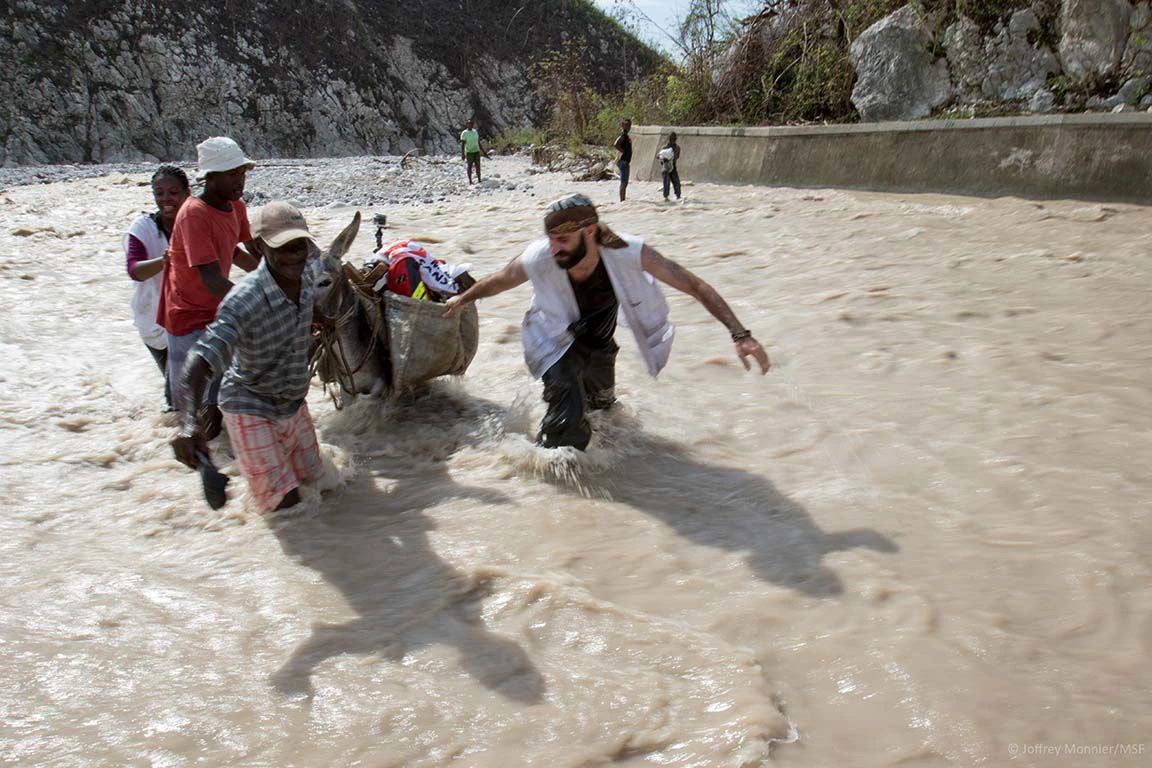
Adrien (left) with MSF Watsan Alejandro Hinojosa and MSF nurse Cassandre Saint-Hubert steer a donkey carrying supplies for a mobile clinic across a river near the village of Seche in region of Port-a-Piment, Haiti. © Joffrey Monnier/MSF
About this project
I wrote this piece during my time as the Communications Officer for MSF Philippines. The idea was to introduce MSF’s humanitarian work to audiences who may not be familiar with it yet, using a listicle format to make the content accessible and SEO-friendly, and grounded in concrete examples from the region and beyond. At the time, listicles were an effective format for reaching new audiences online, and I introduced this content approach to MSF Southeast Asia and Hong Kong as part of building our digital presence. The original article was published on the MSF Southeast Asia website, which has since stopped operating.
What does it take to get essential humanitarian aid to the people who need it?
Médecins Sans Frontières, also known as Doctors Without Borders, is an international humanitarian organization that operates in all corners of the globe in countless different contexts. We respond to both widely-known and unseen emergencies in situations of conflict, natural disasters, or disease outbreaks. Every response is unique, but most of our interventions have a few crucial ingredients in common.
Skilled and passionate staff
From the onset of an emergency response to its completion, we rely on competent teams who understand the needs of those affected, have the skills to provide aid and treatment for patients, and care enough to go the extra mile. Our teams include health professionals, logistics and supply experts, and administrative staff bound together by our passion to help people in need.
In the aftermath of the Marawi siege in 2017, the first part of MSF’s response was to make sure people had access to free and clean water so they could maintain proper hygiene to prevent any disease outbreaks. Our other priority is mental health support, where our counselors organized psycho-social activities for children and adults who were coping with the shock of fleeing violence.
When parts of Mindanao were hit by Typhoon Tembin (locally known as Typhoon Vinta) in December 2017, our teams traveled along destroyed roads and distributed non-food items such as water and hygiene kits in Lanao del Norte. Mental health experts also delivered grief counselling sessions to those who lost loved ones.
Flexibility and resourcefulness
Whether it’s by boat or plane, on three wheels or two feet, reaching those who need medical care involves thinking outside the box.
During the Nepal earthquake in 2015, our teams had to use helicopters to evacuate patients with injuries who were stuck in hard-to-reach villages in the mountainous regions. When a hurricane in 2015 left areas in Haiti flooded and unpassable, our teams brought emergency supplies to the affected areas with the help of donkeys.
Watch this video to see how we reach patients in need, wherever they are.
Working with the community
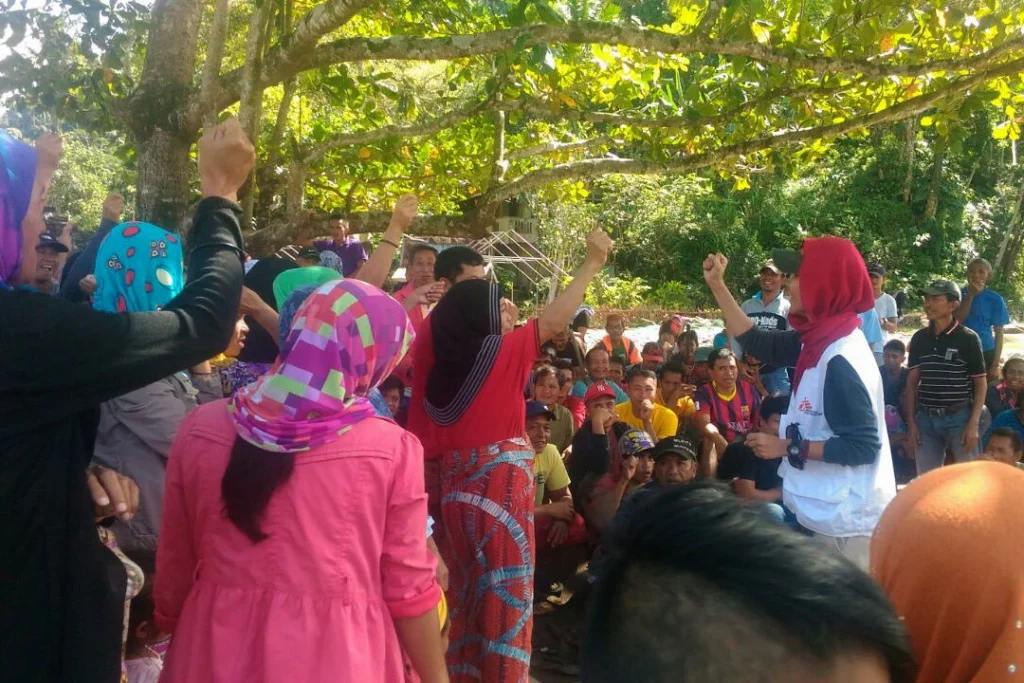
Working alongside the community is often the secret to an effective response. If people don’t believe that the work we are doing will have a positive impact, why would they cooperate?
The second-biggest Ebola outbreak ever recorded is happening right now in the Democratic Republic of Congo (DRC) and is still not under control, one year after its declaration. Almost four out of 10 of the cases notified (confirmed or probable) are community deaths, which means people died of Ebola before they could be identified, diagnosed, and admitted for treatment of the disease.
We saw the urgent need for a better understanding of Ebola and how it’s crucial not to add to the fear and stigma that is associated with it. This is why our teams conduct house visits and even use theatre performances in the villages to convey the importance of treating infectious diseases as fast as possible. Watch this video to see our team in action.
Knowledge of the context
Complex, dangerous, and sensitive: a conflict or disaster zone requires a real understanding of the political landscape and how to navigate between different, sometimes violent, groups to deliver aid.
In El Salvador, there are neighborhoods referred to as “red zones” which have become bastions of gangs and violence, affecting access to medical services. MSF has two ambulances for the transport of patients that enable people living in the red zones to reach health centers and hospitals.
An innovative element of this service is that MSF has introduced women into the combined role of nurses and — something more unusual in El Salvador — drivers. In this video, Claudia Ramírez talks about her daily routine and motivations as a nurse and driver.
Resources
Getting to locations that lack infrastructure, have been decimated by conflict, or are suffering the devastating aftermath of a disaster requires resources. Lots of them. Thanks to funding that is 95% from private, individual donors, MSF can afford to intervene in emergency contexts wherever they are in the world.
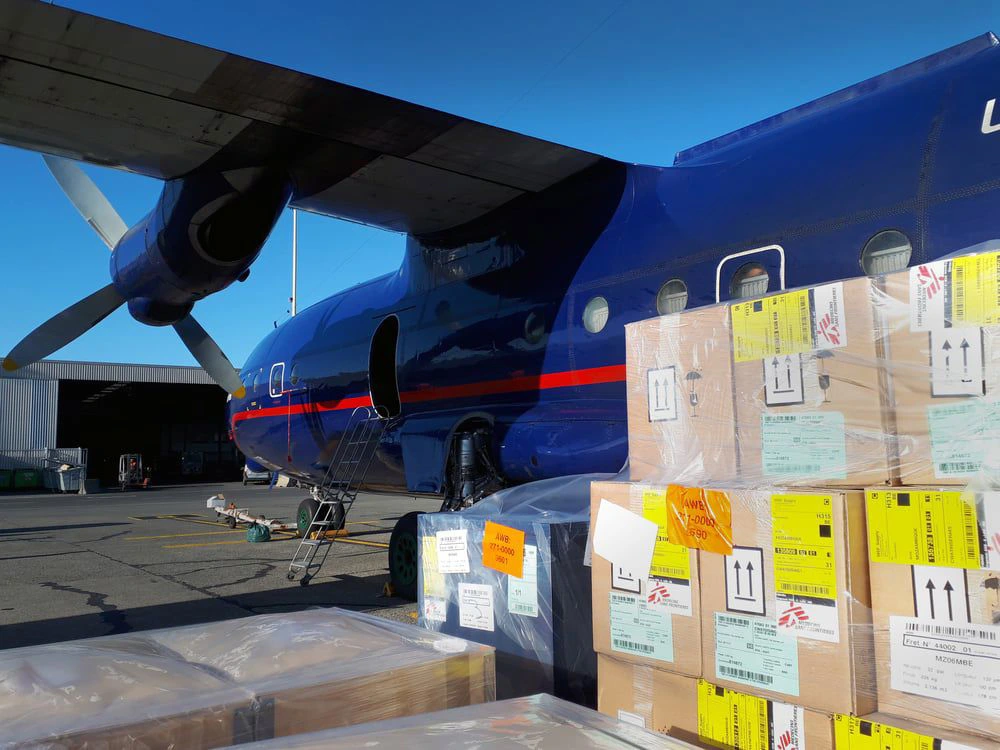
In March 2019, Cyclone Idai left a trail of destruction and catastrophic flooding in its wake in the port city of Beira and other nearby districts in Mozambique. Our first emergency assessment teams were on the ground within four days, and because the needs were enormous, MSF needed a huge supply operation to enable its teams to scale up the response. In a week, MSF sent three chartered flights packed with medical kits, water and sanitation supplies, and logistical equipment for our responders.