The typhoon forecast was accurate. The warning still failed.
Twelve years after Typhoon Haiyan, these are the risk communication gaps we still need to close.

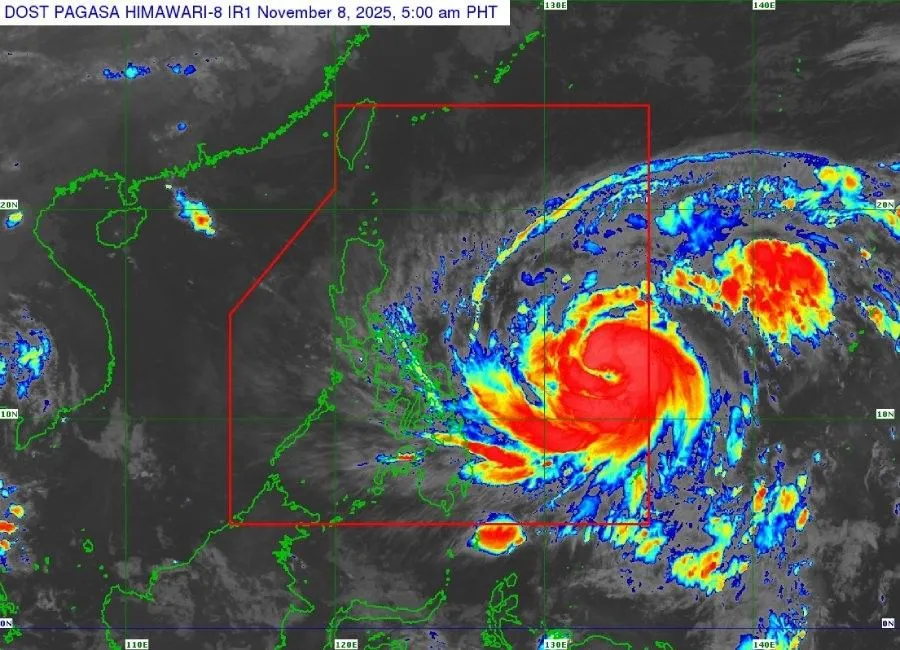
Satellite image of Typhoon Fung-Wong (locally known as Uwan) on 8 November 2025 © DOST PAGASA
The Philippines is located in one of the most disaster-prone regions in the world, hit by an average of 20 typhoons each year.
In November 2013, Typhoon Haiyan (known locally as Yolanda) made landfall as one of the strongest tropical cyclones in recorded history, with sustained winds of 314 km/h and a storm surge that killed more than 6,000 people.
PAGASA, the Philippines’ weather service, predicted the surge 18 hours before it arrived. The forecast was accurate. But people still didn’t evacuate. I was working in communications then, newly arrived in the development sector, watching the coverage unfold and feeling unsettled by how communication gaps cost lives. I didn’t know risk communication was a field. I didn’t have the vocabulary for what had gone wrong. What I had was a question that wouldn’t leave me alone: how do you have the right information and still lose that many people?
That question has followed me through every health emergency I’ve worked on since — COVID-19, dengue outbreaks, the compounding crises we now call normal. This week, as Typhoon Kalmaegi (Tino) tears through communities still recovering from Typhoon Trami (Kristine), it’s the same question again.
The problem in 2013 wasn’t the science. PAGASA knew what was coming. The problem was the word “storm surge.” It was a term most coastal communities in Leyte and Samar had never encountered. Weather bulletins described wave heights in meters and predicted how far inland flooding would extend. What they didn’t do was translate any of that into something a family in a coastal barangay (village) could picture and act on.
What the translation should have sounded like: “A wall of water as tall as a two-story building will sweep inland. If you live within 500 meters of the coast, you will not survive if you stay.”
That’s not dumbing down the science. That’s the actual work of risk communication: bridging the gap between what experts know and what communities can do with that knowledge. Facts transmitted are not facts received.
In the years since Haiyan, there has been real progress. PAGASA now issues storm surge alerts that show how far inland flooding will reach, not just the wave heights. Local authorities have updated disaster response plans. Survivors of Haiyan have become some of the most effective risk communicators in their own communities and climate advocates globally.
But the core assumption still hasn’t changed: that better data automatically produces better decisions. It doesn’t. The gap between knowing and acting is a trust problem, a language problem, and a systems problem. Climate change is making it wider because it keeps producing storms that don’t behave like the ones communities have learned to survive.
So what does closing the gap actually look like?
- Weather agencies issue warnings that describe consequences, not just measurements — not wave heights in meters alone, but what a surge will do to a specific street, a specific coastline, a specific community.
- Local leaders and health communicators build relationships with communities before the typhoon season, so that when the warning comes, it travels through trusted voices, not just official channels.
- Listening to the people who have already survived, because in these communities, the most credible risk communicators are neighbors who are able to evacuate in time.
Twelve years after Haiyan, the forecast will keep getting better. Whether people can act on it depends on the work that happens long before the storm forms, and that work belongs to all of us.
Call to Action: Your Turn
Accurate forecasts are not enough. Saving lives requires communication that travels through trust, speaks in ways people understand, and is backed by systems that make action possible.
Take this further
- Replace storm surge statistics with physical descriptions your community can visualize.
- Map your communication channels against where trust actually lives in your community.
- Ask: does your warning system assume individual decision-making in a collectivist context?